
8 AI Healthcare Breakthroughs We Tested Firsthand

Alex Rivera
February 2, 2026
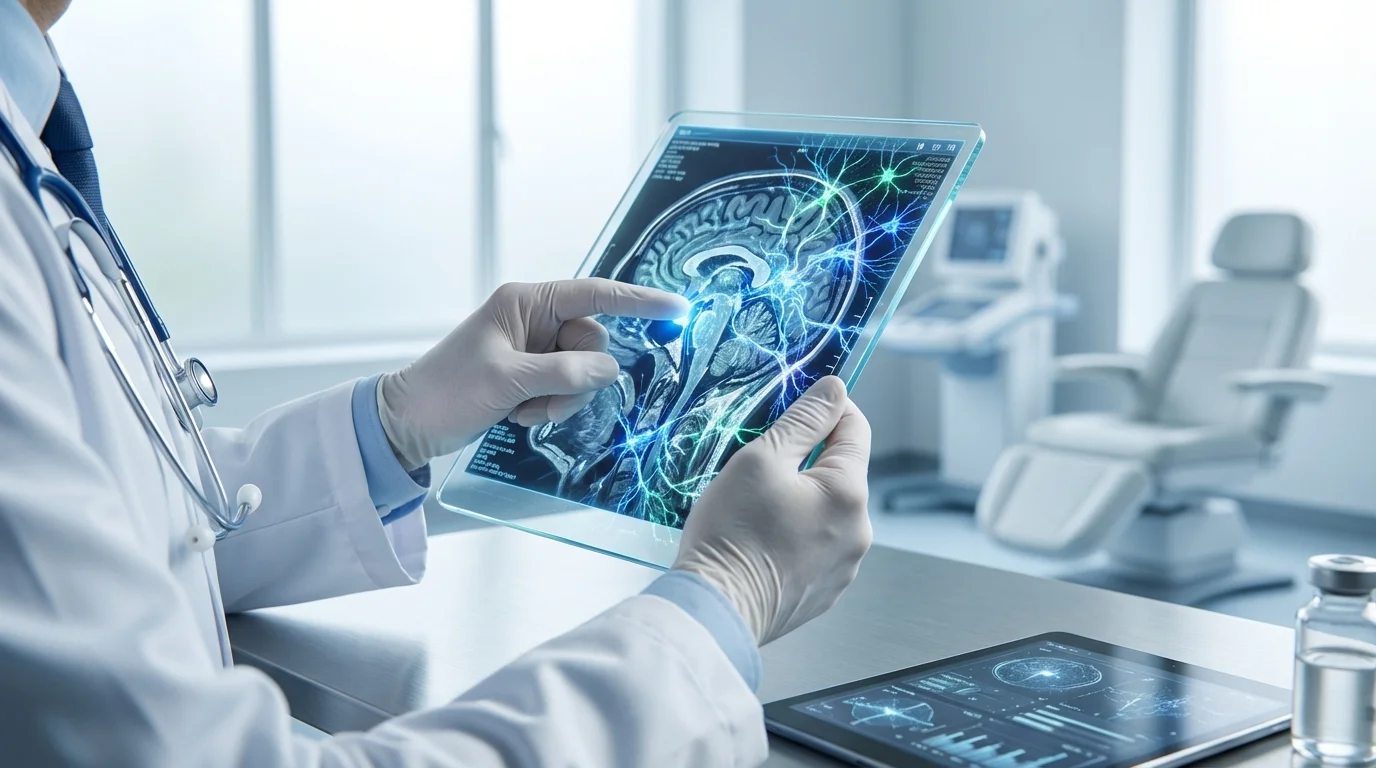
Healthcare is being transformed by artificial intelligence in ways that would have seemed like science fiction a decade ago. AI systems are detecting cancers that experienced radiologists miss, designing drugs in months instead of years, and predicting health crises before symptoms appear.
But the transformation is not the robot-doctor fantasy that headlines suggest. AI in healthcare is a partnership — machines handling the data-intensive tasks they excel at while human professionals provide the judgment, empathy, and complex decision-making that patients need. The result is not AI replacing doctors but doctors becoming dramatically more effective.
Here are eight areas where AI is making the biggest impact right now, supported by real data and real-world deployments.
1. Medical Imaging: Seeing What Humans Miss
What AI Does
Medical imaging — X-rays, CT scans, MRIs, mammograms, and pathology slides — is one of AI's most mature healthcare applications. AI systems analyze images pixel by pixel, detecting patterns too subtle or too small for the human eye.
Cancer detection: AI systems consistently match or exceed expert radiologist accuracy for detecting breast cancer in mammograms, lung cancer in CT scans, skin cancer in dermatoscopy images, and colorectal polyps in colonoscopy. A landmark 2024 study showed that AI-assisted radiologists detected 20% more cancers than radiologists working alone, while reducing false positives by 5%.
Diabetic retinopathy: Google's AI system screens for diabetic eye disease with 90%+ accuracy, enabling screening in clinics that lack specialist ophthalmologists. This is particularly impactful in developing countries where millions of diabetics have no access to eye specialists.
Stroke detection: AI analyzes brain scans within minutes of arrival at the emergency room, identifying large vessel occlusion strokes that require immediate intervention. In stroke treatment, every minute matters — AI's speed advantage directly translates to saved brain tissue and better patient outcomes.
The Impact
AI does not replace radiologists — it acts as a tireless second reader that catches what humans miss. Radiologists using AI assistance are more accurate and more efficient than either AI or humans working alone. The FDA has approved over 800 AI-enabled medical devices, with imaging applications comprising the largest category.
2. Drug Discovery: From Decades to Months
What AI Does
Traditional drug development is extraordinarily slow and expensive — an average of 10-15 years and $2.6 billion from initial concept to approved medicine. Most drug candidates fail, with only about 10% of drugs entering clinical trials eventually reaching patients.
AI is compressing this timeline dramatically:
Target identification: AI analyzes genomic data, protein structures, and disease pathways to identify promising drug targets — molecules that a drug could interact with to treat a disease. This analysis, which previously took years of laboratory work, can now be done computationally in weeks.
Molecule design: AI generates and evaluates millions of potential drug molecules computationally, predicting which ones will bind effectively to the target, have acceptable toxicity, and be stable enough to manufacture. This replaces years of trial-and-error laboratory chemistry with guided, efficient computational design.
Clinical trial optimization: AI identifies the patients most likely to respond to a treatment, optimizes trial design, and predicts potential side effects — making clinical trials faster, smaller, and more likely to succeed.
Real-World Results
Insilico Medicine used AI to identify a drug target and design a novel drug candidate for idiopathic pulmonary fibrosis in just 18 months — a process that typically takes 4-5 years. The drug entered Phase II clinical trials in 2023.
AlphaFold by DeepMind predicted the 3D structure of virtually every known protein — a breakthrough that accelerates drug design across every therapeutic area. The database has been cited in over 20,000 research papers.
Recursion Pharmaceuticals uses AI and robotic labs to screen millions of drug candidates simultaneously, compressing years of discovery work into months.
The Impact
AI will not replace the need for clinical trials or regulatory approval — safety and efficacy must still be proven in humans. But by dramatically reducing the time and cost of pre-clinical development, AI makes it economically viable to develop drugs for diseases that previously did not justify the investment, including rare diseases affecting small patient populations.
3. Predictive Analytics: Preventing Crises Before They Happen
What AI Does
AI excels at finding patterns in complex data — and patient data is extraordinarily complex. By analyzing vital signs, lab results, medical history, and other data points, AI can predict health crises hours or days before they become emergencies.
Sepsis prediction: Sepsis kills over 250,000 Americans annually, and early detection dramatically improves survival. AI systems monitor patient data continuously and alert clinicians when patterns suggest developing sepsis — often 4-12 hours before clinical symptoms become apparent.
Heart failure prediction: AI analyzes ECG data, imaging, and patient history to predict heart failure exacerbations before they require emergency hospitalization. This enables preventive interventions that keep patients at home and out of the emergency room.
Hospital readmission: AI identifies patients at high risk of being readmitted within 30 days of discharge, enabling targeted follow-up care that prevents costly and dangerous readmissions.
Real-World Results
Johns Hopkins Hospital implemented an AI early warning system that reduced cardiac arrest rates by 26% and unplanned ICU transfers by 35% by identifying deteriorating patients earlier.
Kaiser Permanente uses AI to predict which patients are at highest risk for various conditions, enabling proactive outreach and preventive care that improves outcomes while reducing costs.
The Impact
Predictive AI shifts healthcare from reactive (treating problems after they occur) to proactive (preventing problems before they happen). This is better for patients, less expensive for healthcare systems, and represents a fundamental shift in how medicine is practiced.
4. Personalized Treatment Plans
What AI Does
Every patient is unique — different genetics, different medical histories, different responses to medications. AI enables treatment plans tailored to individual patients rather than one-size-fits-all protocols.
Genomic medicine: AI analyzes a patient's genetic profile to predict how they will respond to specific medications, enabling doctors to choose the most effective treatment and dosage from the start rather than through trial and error.
Cancer treatment: AI analyzes tumor genetics, pathology images, and treatment outcomes data to recommend the most effective chemotherapy, immunotherapy, or targeted therapy for each patient's specific cancer profile.
Chronic disease management: For conditions like diabetes, heart disease, and asthma, AI creates personalized management plans based on continuous monitoring data, adjusting recommendations in real time as the patient's condition changes.
Real-World Results
Tempus uses AI to analyze clinical and molecular data, helping oncologists choose the most effective cancer treatments based on the patient's specific tumor characteristics. Over 50% of US academic medical centers use their platform.
IBM Watson for Oncology analyzes patient records against medical literature to suggest evidence-based treatment options. While its real-world performance has been mixed, it demonstrates the direction of personalized treatment planning.
The Impact
Personalized medicine powered by AI reduces adverse drug reactions (which cause over 100,000 deaths annually in the US), improves treatment efficacy, and reduces the time patients spend on ineffective treatments.
5. Mental Health Support
What AI Does
Mental health care faces a global crisis of access — the World Health Organization estimates that 75% of people with mental health conditions in developing countries receive no treatment at all. Even in wealthy nations, wait times for therapy can extend months. AI is helping fill this gap.
AI therapy assistants: Chatbot-based systems provide cognitive behavioral therapy (CBT) techniques, mindfulness exercises, and emotional support between sessions with human therapists. They are not replacements for professional care but valuable supplements that extend the reach of limited mental health resources.
Crisis detection: AI monitors communication patterns and social media activity to identify individuals at risk of self-harm or suicide, enabling early intervention.
Treatment monitoring: AI tracks mood patterns, sleep quality, activity levels, and communication patterns through smartphone data, alerting clinicians to concerning changes before the patient's next scheduled appointment.
Real-World Results
Woebot is an AI-powered chatbot that delivers CBT techniques through conversational interaction. Clinical studies show it significantly reduces depression and anxiety symptoms in users, particularly those who cannot access traditional therapy due to cost or availability.
Crisis Text Line uses AI to prioritize incoming messages by urgency, ensuring that individuals in the most acute distress receive human counselor attention fastest.
The Impact
AI mental health tools are not replacements for human therapists — they are extensions that make mental health support available 24/7, reduce barriers to initial care, and help therapists monitor patients between sessions. In a field facing a severe shortage of providers, this extension of capacity is lifesaving.
6. Administrative Automation
What AI Does
Healthcare administration consumes an enormous proportion of healthcare spending — estimated at 25-30% of total US healthcare expenditure. AI is automating the administrative tasks that consume clinician time and drive up costs.
Clinical documentation: AI transcribes doctor-patient conversations in real time, generating structured clinical notes that conform to required formats. Doctors spend an average of 2 hours daily on documentation — AI can reduce this to minutes of review and approval.
Billing and coding: AI automatically assigns appropriate medical codes to procedures and diagnoses, reducing coding errors and accelerating reimbursement. Incorrect coding costs the US healthcare system billions annually in denied claims and rework.
Scheduling optimization: AI optimizes patient scheduling by predicting appointment duration, no-show probability, and resource requirements, improving clinic efficiency and reducing wait times.
Prior authorization: AI automates the prior authorization process — the bureaucratic requirement to get insurer approval before procedures — reducing delays that can be clinically dangerous.
Real-World Results
Nuance's DAX Copilot (used by thousands of physicians) listens to patient conversations and generates clinical notes automatically. Physicians report saving over an hour daily and experiencing less burnout.
Notable Health automates patient intake, prior authorization, and referral management, reducing administrative staff workload by 30-50%.
The Impact
Administrative AI has the most immediate, measurable impact on healthcare costs and clinician burnout. By returning hours to doctors that were consumed by paperwork, AI enables more patient time, better care quality, and reduced physician burnout — a crisis that costs the healthcare system billions and compromises patient safety.
7. Robotic Surgery
What AI Does
AI-assisted robotic surgery combines the precision of robotics with the intelligence of AI to enable operations that exceed human manual capability:
Precision: Robotic surgical systems operate with sub-millimeter accuracy, eliminating the natural tremor of human hands and enabling work in spaces too small for traditional instruments.
Real-time guidance: AI overlays imaging data, tumor boundaries, and critical structure locations onto the surgeon's view in real time, providing a "surgical GPS" that reduces the risk of damaging healthy tissue.
Autonomous tasks: For specific surgical steps — suturing, tissue dissection in well-defined areas — AI can perform the task autonomously under surgeon supervision, with greater consistency than human performance.
Real-World Results
Intuitive Surgical's da Vinci system has been used in over 12 million procedures. Studies consistently show shorter recovery times, less blood loss, reduced complications, and smaller incisions compared to traditional surgery.
Vicarious Surgical develops AI-powered miniature robots that can perform complex abdominal surgery through a single small incision, using AI vision and machine learning to navigate the surgical environment.
The Impact
Robotic surgery reduces recovery times, complications, and hospital stays. As AI capabilities improve, the range of procedures that benefit from robotic assistance will expand, and the technology will become accessible to smaller hospitals and developing countries through remote surgical assistance.
8. Genomics and Precision Medicine
What AI Does
The human genome contains approximately 3 billion base pairs. Interpreting this data — identifying variants that cause or contribute to disease, predicting disease risk, and determining treatment implications — requires computational power that only AI can provide at scale.
Rare disease diagnosis: AI analyzes patient genomes to identify mutations responsible for rare genetic diseases. For families who have spent years searching for a diagnosis, AI can provide answers in days.
Cancer genomics: AI analyzes tumor DNA to identify the specific mutations driving a patient's cancer, enabling targeted therapies that attack the cancer's specific weaknesses rather than using a general-purpose approach.
Pharmacogenomics: AI predicts how a patient's genetic makeup will affect their response to medications, enabling doctors to prescribe the right drug at the right dose from the start.
Population health: AI analyzes genomic data across large populations to identify genetic risk factors for diseases, enabling preventive interventions for at-risk groups.
Real-World Results
Illumina uses AI to interpret whole genome sequencing results, reducing analysis time from weeks to hours while improving the accuracy of variant identification.
Foundation Medicine analyzes tumor genomics using AI to match cancer patients with the most effective targeted therapies and clinical trials.
The Impact
Genomic AI is enabling a shift from reactive, symptom-based medicine to proactive, genetically-informed healthcare. As whole genome sequencing becomes cheaper (approaching $100 per genome), AI-powered interpretation will make precision medicine accessible to millions.
The Challenges Ahead
Data Privacy and Security
Healthcare AI requires access to sensitive patient data. Balancing the need for data to train and improve AI systems with the imperative to protect patient privacy is an ongoing challenge. Techniques like federated learning (training AI models across institutions without sharing raw data) offer promising solutions.
Bias and Equity
AI systems trained on data from predominantly wealthy, Western patient populations may perform poorly for underrepresented groups. Ensuring that healthcare AI works equitably across demographics, geographies, and socioeconomic groups requires deliberate effort in data collection and algorithm design.
Regulatory Frameworks
Medical AI operates in a heavily regulated environment, which is appropriate given the stakes. But regulatory frameworks designed for traditional medical devices are adapting to accommodate AI systems that learn and change over time. The FDA's approach to AI regulation is evolving, but the pace of technology advancement often outstrips regulatory adaptation.
Trust and Adoption
Clinicians and patients must trust AI systems for them to be effective. Building this trust requires transparency about how AI makes recommendations, rigorous validation studies, and gradual integration that demonstrates value before demanding broad adoption.
Frequently Asked Questions
Will AI replace my doctor? No. AI will make your doctor more effective, more accurate, and less burdened by paperwork. The core elements of medical care — physical examination, clinical judgment, empathy, and the therapeutic relationship — remain fundamentally human.
Is AI-powered diagnosis reliable? For specific, well-studied applications (medical imaging, certain predictive models), AI matches or exceeds human expert performance. For complex diagnostic scenarios requiring integration of diverse information and clinical judgment, human physicians remain essential. The most effective model is AI and human expertise working together.
How can I benefit from healthcare AI today? Many hospitals already use AI-powered tools for imaging analysis, scheduling, and administrative tasks. Ask your healthcare provider about AI-assisted diagnostic tools available for your conditions. Consumer health wearables (smartwatches with heart rhythm detection, blood oxygen monitoring) use AI algorithms for health monitoring.
Is my health data safe with AI systems? Healthcare AI systems are subject to strict data protection regulations (HIPAA, GDPR). However, risks exist, particularly as data sharing increases. Ask your healthcare providers about their data practices and understand your rights regarding health data.
The Bottom Line
AI is not replacing healthcare professionals — it is amplifying their capabilities in every dimension: more accurate diagnosis, more effective treatments, earlier intervention, less administrative burden, and more personalized care. The transformation is already underway, with measurable improvements in patient outcomes across multiple applications.
The healthcare system of 2030 will look fundamentally different from today's — not because robots are treating patients, but because AI-augmented clinicians are delivering better, faster, more personalized care than was ever possible before. Patients benefit through earlier detection, more effective treatments, and a healthcare system that prevents illness rather than just treating it.