
AI in Education: 5 Tools That Actually Work

Alex Rivera
February 13, 2026
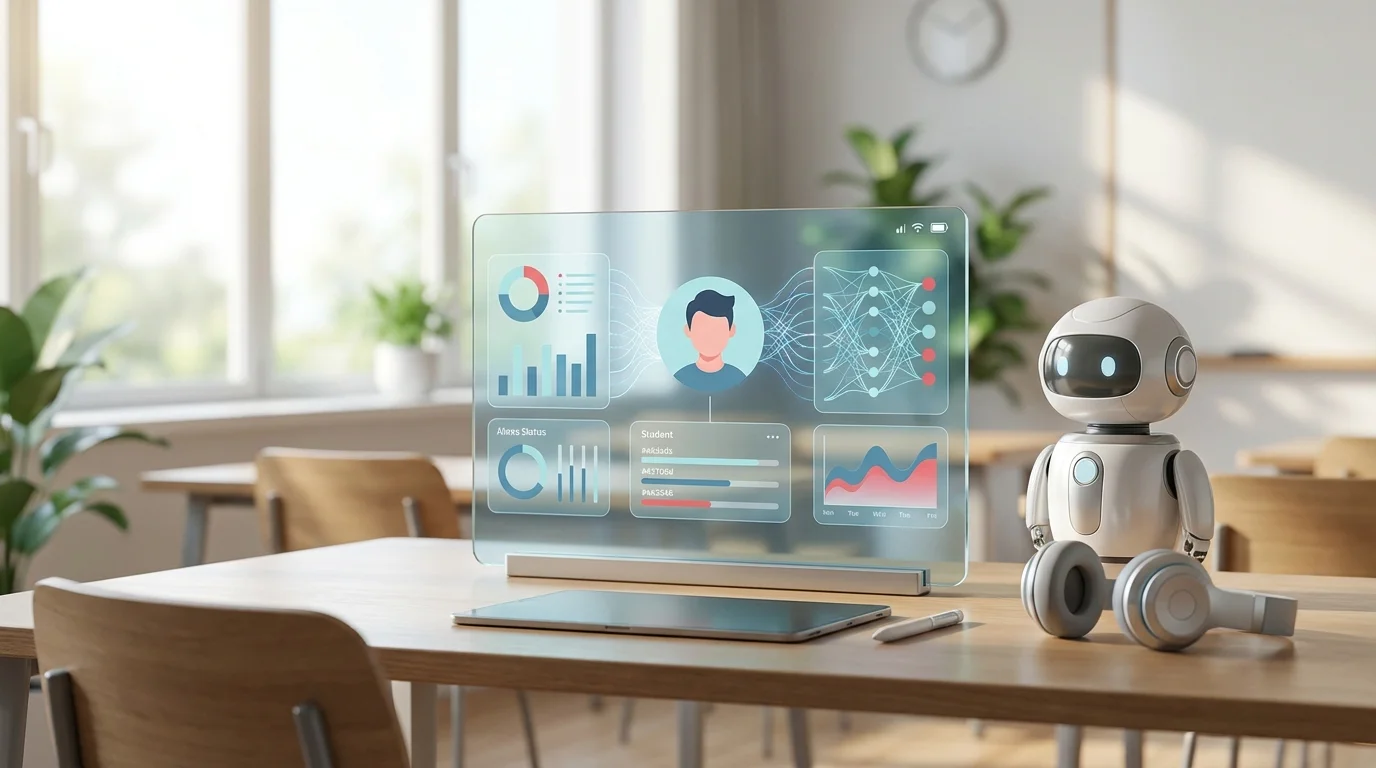
Education is experiencing its most significant transformation since the introduction of the internet into classrooms. Artificial intelligence is not a distant possibility for schools and universities — it is already embedded in how millions of students learn, how teachers plan lessons, and how institutions operate. By 2026, AI tutoring systems serve millions of students globally, adaptive learning platforms personalize instruction at a scale no human teacher could achieve alone, and the fundamental question of what students need to learn is being reconsidered in a world where AI can write, calculate, and analyze faster than any human.
But the transformation is messy, uneven, and deeply controversial. While some schools embrace AI as a tool for equity and personalization, others ban it entirely over concerns about cheating and intellectual development. Teachers are simultaneously excited by AI's potential and anxious about its implications for their profession. Students are using AI in ways that range from genuinely productive to blatantly dishonest — and the line between those categories is far from clear.
This article examines how AI is actually being used in education in 2026, what is working, what is not, and what the future holds for learning in an AI-powered world.
Personalized Learning at Scale
The Promise
The most compelling application of AI in education is personalization. In a traditional classroom, a single teacher delivers the same lesson to 25 or 30 students who have different knowledge levels, learning speeds, strengths, and weaknesses. Some students are bored because the material is too easy. Others are lost because it is too hard. Most receive instruction that is approximately but not precisely calibrated to their needs.
AI changes this dynamic fundamentally. An AI-powered learning platform can assess each student's current knowledge in real time, identify specific gaps and misconceptions, adjust the difficulty and pacing of content dynamically, present material in formats that match the student's learning preferences, and provide immediate feedback on every exercise and assignment.
This is not theoretical. Platforms like Khan Academy's Khanmigo, Carnegie Learning's MATHia, DreamBox, and IXL Learning serve millions of students with personalized instruction that adapts continuously based on performance data.
How It Works in Practice
A student working on a personalized math platform might encounter a problem on fractions. If they solve it quickly and correctly, the system immediately presents a harder problem. If they struggle, the system does not simply repeat the same problem — it analyzes the specific error to identify the underlying misconception.
Did the student add denominators instead of finding a common denominator? The system recognizes this pattern and presents targeted instruction on common denominators before offering a simpler fraction problem. Did the student make a computational error but demonstrate conceptual understanding? The system notes the concept is mastered and focuses on arithmetic accuracy.
This kind of granular, real-time adaptation would be impossible for a human teacher managing a full classroom. The AI is not better than a skilled teacher working one-on-one with a student — but it can provide something closer to one-on-one attention for every student simultaneously.
Results So Far
The evidence for AI-personalized learning is promising but mixed. A 2025 meta-analysis published in the Journal of Educational Psychology examined 83 studies of AI-adaptive learning platforms and found a moderate positive effect on student achievement — an average improvement of about 0.3 standard deviations compared to traditional instruction. This is educationally meaningful but not transformative.
The benefits are most pronounced for students who are significantly behind grade level. These students often cannot keep up with whole-class instruction and disengage. Adaptive platforms meet them where they are and provide a non-judgmental environment for building foundational skills. Several school districts have reported significant improvements in math proficiency among struggling students after implementing AI-adaptive platforms.
The effects are less dramatic for high-performing students, suggesting that AI personalization is currently better at remediation than enrichment. This is likely because the content libraries for advanced, creative, and open-ended learning are less developed than those for foundational skill-building.
AI Tutoring Systems
The Evolution of AI Tutors
AI tutoring has evolved dramatically from the scripted, rigid systems of earlier decades. Modern AI tutors powered by large language models can engage in natural conversation, answer follow-up questions, adjust their explanations based on student responses, and provide worked examples tailored to the student's specific difficulty.
Khan Academy's Khanmigo, launched in partnership with OpenAI, represents the current state of the art. Available to millions of students, Khanmigo acts as a Socratic tutor — it does not simply give answers but guides students toward understanding through questions and hints. When a student asks for help with a math problem, Khanmigo might respond: "I can see you are stuck on this step. What do you think happens when you multiply both sides of the equation by 3? Try it and tell me what you get."
This Socratic approach addresses one of the key concerns about AI in education — that it will encourage passivity and shortcut-seeking. By refusing to give direct answers and instead guiding the reasoning process, well-designed AI tutors can actually strengthen critical thinking rather than undermine it.
Effectiveness and Limitations
AI tutors are effective for well-defined subjects with clear right and wrong answers — mathematics, science, programming, and foreign language grammar. They are less effective for subjects that require nuanced interpretation, creative expression, or subjective judgment — literature analysis, philosophical reasoning, artistic critique.
A significant limitation is that AI tutors cannot detect student emotions the way a human teacher can. A teacher notices when a student is frustrated, disengaged, or confused — and adjusts not just the content but the emotional approach. AI can detect patterns in response time and error rates that suggest frustration, but it cannot replicate the human warmth and encouragement that often makes the difference between a student persisting and giving up.
Another limitation is reliability. Despite improvements, language model tutors occasionally provide incorrect information or misleading explanations. In a subject like mathematics, where precision matters, even occasional errors can reinforce misconceptions. Schools deploying AI tutors need monitoring systems to catch and correct these errors.
Automated Assessment and Feedback
Beyond Multiple Choice
AI has dramatically expanded what can be automatically assessed. Traditional automated assessment was limited to multiple-choice and fill-in-the-blank questions. Modern AI can evaluate essays, assess programming assignments, grade mathematical proofs, analyze lab reports, and provide detailed feedback on written work.
Essay assessment using AI has been implemented by testing organizations including the Educational Testing Service (which administers the GRE and TOEFL) and numerous university writing programs. These systems evaluate not just grammar and spelling but argument structure, evidence use, coherence, and writing style.
Programming assessment has seen particularly strong AI adoption. Platforms like Codio, Gradescope, and automated systems built on LLMs can evaluate code for correctness, efficiency, style, and test coverage — providing the detailed feedback that is most valuable for learning but most time-consuming for instructors to provide manually.
The Impact on Teacher Workload
Teachers spend an enormous amount of time on grading — surveys consistently find that grading consumes 5-10 hours per week for a typical teacher, and significantly more for those teaching writing-intensive subjects. AI-assisted grading can reduce this burden substantially, freeing teachers to spend more time on instruction, mentoring, and the human aspects of teaching that AI cannot replicate.
The most effective implementations use AI as a first pass rather than a replacement for human judgment. The AI provides initial scores and detailed feedback, and the teacher reviews, adjusts, and adds personal comments. This hybrid approach is faster than fully manual grading while maintaining the human oversight that parents and students expect.
Concerns About Fairness
Automated grading raises legitimate fairness concerns. AI systems can exhibit biases related to dialect, cultural references, and writing conventions. A student writing in African American Vernacular English or incorporating cultural references unfamiliar to the training data might receive lower scores than a student writing in standard academic English, even if the ideas and reasoning are equally strong.
Addressing these biases requires diverse training data, regular auditing of AI grading systems across demographic groups, and human oversight for high-stakes assessments. Many educational institutions restrict AI grading to formative assessments (practice and feedback) rather than summative assessments (final grades) while fairness issues are being resolved.
AI Literacy: What Students Need to Learn
A New Essential Skill
The rapid integration of AI into every industry means that AI literacy is becoming as essential as computer literacy became in the 2000s. Students who graduate without understanding how AI works, what it can and cannot do, and how to use it effectively will be at a significant disadvantage in the job market.
AI literacy goes beyond knowing how to use ChatGPT. It encompasses understanding how AI systems are trained, recognizing the limitations and biases of AI outputs, knowing when to trust and when to verify AI-generated content, using AI tools productively for learning and work, understanding the ethical implications of AI, and developing the critical thinking skills to evaluate AI-generated information.
Integration into Curriculum
Schools are taking varied approaches to AI literacy education. Some are introducing standalone AI courses, while others integrate AI concepts across existing subjects. The most effective approaches do both — dedicated instruction on AI fundamentals combined with practical use of AI tools in every subject area.
In mathematics, students might learn about the statistical foundations of machine learning. In science, they explore how AI is used in research and what constitutes valid AI-generated evidence. In English and history, they practice evaluating AI-generated text for accuracy, bias, and quality. In art and music, they explore the creative possibilities and ethical questions of generative AI.
Several countries have introduced AI literacy standards for K-12 education. The UK, Singapore, South Korea, and China have been leaders in developing national AI education curricula. The United States has been slower to act at the federal level, but individual states and school districts are implementing their own AI literacy programs.
The Cheating Problem
The Central Dilemma
AI has created a cheating crisis in education that institutions are still struggling to address. Students can use ChatGPT, Claude, or other language models to generate essays, solve problem sets, write code, and complete virtually any assignment that does not require in-person demonstration.
The scale is significant. Surveys of college students consistently find that 50-70% have used AI on assignments, with a substantial minority using it in ways their institution would consider academic dishonesty. The boundary between acceptable AI assistance and cheating varies dramatically between institutions and even between professors within the same institution.
Detection Tools and Their Limitations
AI detection tools — software that attempts to determine whether text was written by a human or an AI — have proliferated but remain unreliable. Tools like Turnitin's AI detection, GPTZero, and others claim varying levels of accuracy, but independent testing consistently shows significant false positive rates (flagging human-written text as AI-generated) and false negative rates (missing AI-generated text).
The fundamental problem is that AI-generated text is statistically similar to human-written text — that is exactly what the models were trained to produce. As models improve, the statistical signatures that detection tools look for become less reliable. And simple techniques like paraphrasing, adding personal anecdotes, or having the AI mimic a specific writing style can easily evade detection.
Several universities have moved away from AI detection entirely after high-profile cases of false accusations against students. Instead, they are redesigning assessments to be AI-resistant or AI-inclusive.
Redesigning Assessment
The most thoughtful institutional responses are not trying to ban AI but to redesign assessments so that AI use is either impossible or explicitly part of the exercise.
In-class assessments — writing, problem-solving, and presentations done in controlled environments without AI access — remain the gold standard for evaluating individual understanding. Many universities have shifted weight toward in-class exams and oral presentations.
Process-based assessment requires students to document their work process — brainstorming notes, drafts, revision history, source material — rather than just submitting a final product. This makes it much harder to simply paste an AI-generated response.
AI-augmented assignments explicitly require AI use and evaluate the student's ability to use AI effectively, critically evaluate its output, and add value beyond what the AI provides. Students might be asked to have an AI generate an initial draft and then analyze its weaknesses, correct its errors, and improve it with their own research and reasoning.
Teacher Perspectives
Optimism and Anxiety
Teacher attitudes toward AI in education are complex and evolving. Surveys consistently show a split: roughly a third of teachers are enthusiastic about AI's potential, a third are cautiously open but concerned, and a third are skeptical or resistant.
The enthusiasts see AI as a tool that handles the administrative and repetitive aspects of teaching — grading, differentiation, communication — freeing them to focus on what they do best: inspiring students, facilitating discussions, providing mentorship, and creating engaging learning experiences.
The skeptics worry about deskilling, job displacement, student dependency on AI, and the erosion of the deep thinking that comes from struggling with difficult material without algorithmic assistance.
What Teachers Actually Need
Regardless of their attitudes, teachers consistently identify several needs: professional development on how to use AI tools effectively, clear institutional policies on acceptable AI use, time to experiment and integrate AI into their practice, and assurance that AI is a supplement to their role, not a replacement for it.
The most successful AI implementations in schools share a common characteristic: teachers were involved in the design and rollout from the beginning. Top-down mandates to adopt AI tools without teacher input and training consistently fail. Bottom-up adoption, where interested teachers experiment, share what works, and gradually bring colleagues along, produces more sustainable results.
Case Studies
Arizona State University: Large-Scale AI Integration
ASU has been among the most aggressive adopters of AI in higher education, partnering with OpenAI to provide ChatGPT Enterprise to all students and faculty. The university has redesigned dozens of courses to incorporate AI tools, trained thousands of faculty members on effective AI pedagogy, and launched new degree programs in AI and data science.
Early results show improved student satisfaction in courses that effectively integrate AI, but no significant change in learning outcomes as measured by standardized assessments. The university acknowledges that the benefits may take several years to manifest in measurable academic achievement.
Singapore: National AI Education Strategy
Singapore has implemented one of the world's most comprehensive national strategies for AI in education. Every secondary school has AI learning modules, teacher training in AI pedagogy is mandatory, and students are expected to complete projects using AI tools as part of their standard curriculum.
Singapore's approach emphasizes AI literacy alongside AI use — students learn not just how to use AI tools but how they work, where they fail, and what ethical considerations apply. This comprehensive approach has produced students who are more sophisticated and critical users of AI compared to peers in countries without structured AI education.
Rural Schools: The Equity Challenge
The benefits of AI in education are not evenly distributed. Schools in wealthy districts with strong technology infrastructure, well-trained teachers, and engaged parents can implement AI tools effectively. Schools in rural and low-income areas often lack the broadband connectivity, devices, technical support, and teacher training needed to use AI platforms at all.
This digital divide risks turning AI into a tool that widens educational inequality rather than narrowing it. Students in well-resourced schools gain AI-augmented learning advantages while students in underserved schools fall further behind. Addressing this equity gap is one of the most important challenges in AI education policy.
Challenges and Concerns
Data Privacy
AI learning platforms collect enormous amounts of data on students — every answer, every hesitation, every error pattern. This data is valuable for personalizing instruction but raises serious privacy concerns, particularly for children. Who owns this data? How long is it retained? Can it be used for purposes beyond education? Can it be sold to third parties?
Regulations like FERPA in the United States and GDPR in Europe provide some protections, but the legal frameworks have not kept pace with the technology. Parents and privacy advocates are increasingly concerned about the long-term implications of creating detailed learning profiles for every child.
Cognitive Development
Some educators and developmental psychologists worry that AI assistance during formative years could impair the development of critical cognitive skills. Struggling with a difficult math problem builds persistence, problem-solving skills, and mathematical intuition. If AI smooths away every difficulty, students may develop shallow understanding and poor tolerance for intellectual challenge.
The counterargument is that AI can be designed to scaffold learning — providing enough support to prevent frustration while still requiring students to do the thinking. The key is how AI tools are designed and deployed, not whether they are used at all.
The Role of Human Connection
Learning is fundamentally a human activity. Students learn not just content but social skills, emotional regulation, conflict resolution, and identity formation through their interactions with teachers and peers. An overreliance on AI-mediated learning could diminish these crucial developmental experiences.
The most thoughtful approaches to AI in education recognize that technology should enhance human connection, not replace it. AI handles the routine and the repetitive so that human teachers have more time and energy for the conversations, mentoring, and relationship-building that no algorithm can replicate.
The Future of AI in Education
Several trends will shape AI's role in education over the coming years.
Multimodal AI tutors that can see student work (through a camera), hear their questions, and respond with voice, text, and visual explanations will make AI tutoring more natural and effective. The interaction will feel more like talking to a human tutor and less like typing into a chatbox.
Emotional AI that can detect student frustration, confusion, or disengagement through facial expressions, voice tone, and behavioral patterns will enable AI systems to respond with more appropriate pacing and encouragement.
Collaborative AI that facilitates group learning — managing team projects, facilitating discussions, ensuring all students participate — will extend AI's role beyond individual tutoring.
Credential evolution will see a shift from traditional degrees toward demonstrated competencies, with AI playing a role in continuous assessment that validates specific skills rather than broad credentials.
Conclusion
AI is not going to replace teachers, just as calculators did not replace mathematicians and the internet did not replace libraries. But it is fundamentally changing what effective teaching looks like, what students need to learn, and how educational institutions operate.
The institutions and educators that thrive will be those who approach AI with clear-eyed pragmatism — neither uncritically embracing every new tool nor reflexively rejecting the technology out of fear. They will use AI for what it does well (personalization, feedback, administrative efficiency) while preserving what humans do best (inspiration, mentorship, emotional support, creative thinking).
The students who thrive will be those who learn to use AI as a powerful tool while developing the critical thinking, creativity, and human skills that AI cannot provide. In a world where anyone can generate a competent essay or solve a textbook problem with AI assistance, the ability to think originally, communicate persuasively, collaborate effectively, and learn continuously becomes more valuable than ever.
The future of education is not human or AI — it is human and AI, working together in ways we are only beginning to understand.