
Will AI Replace Your Job? We Analyzed 12 Industries

Alex Rivera
February 7, 2026
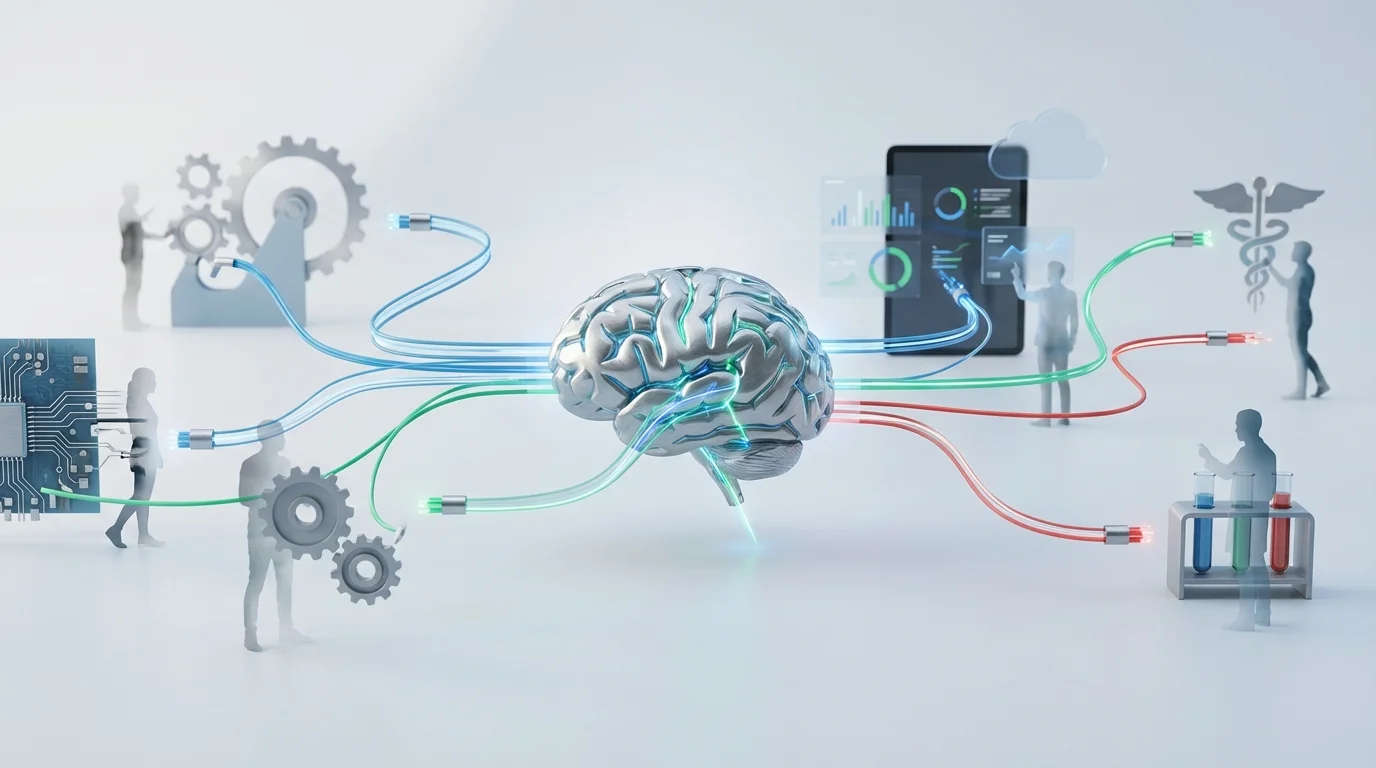
The question "will AI take my job?" is asked with growing urgency as AI capabilities expand month by month. The honest answer is more nuanced than either the doom-saying headlines or the dismissive reassurances suggest. Some jobs will be eliminated. Many will be transformed. New ones will be created. And the timeline varies dramatically by industry.
We analyzed research from McKinsey, Goldman Sachs, the World Economic Forum, and the OECD, combined with our own assessment of current AI capabilities, to provide an industry-by-industry outlook. This is not speculation — it is an evidence-based assessment of where AI automation stands today and where it is heading.
The Big Picture
The World Economic Forum estimates that by 2030, AI will displace 85 million jobs globally while creating 97 million new ones — a net gain of 12 million jobs. Goldman Sachs projects that 300 million full-time jobs worldwide could be partially automated by generative AI, but emphasizes that "partially" is the key word.
The pattern from every previous technology revolution holds: automation destroys specific tasks, not entire professions. The automobile eliminated carriage-driving jobs but created millions of positions in manufacturing, maintenance, infrastructure, logistics, and services that could not have been imagined in 1900.
AI is following the same pattern, but at a faster pace. The transition will be measured in years, not decades.
Industry-by-Industry Analysis
Administrative and Office Support — High Impact
Risk Level: High (40-60% of tasks automatable)
Administrative work involves many of the tasks AI handles best — data entry, scheduling, correspondence, document processing, and information routing. AI tools already handle email triage, calendar management, meeting transcription, report generation, and basic data analysis.
What will change: Routine administrative roles — data entry clerks, basic bookkeeping, appointment scheduling, and first-tier customer service — will be significantly reduced. Companies that employed five administrative assistants will need two, augmented by AI tools.
What survives: Executive assistants who manage relationships, navigate organizational politics, and exercise judgment in ambiguous situations. Office managers who coordinate physical spaces and handle interpersonal dynamics. Administrative roles requiring significant face-to-face interaction and emotional intelligence.
Timeline: Already happening. 30-50% task reduction by 2028.
Software Development — Medium-High Transformation
Risk Level: Medium (jobs transform rather than disappear)
AI coding assistants are the most widely adopted AI tools in any profession, with 76% of developers using them daily. AI writes boilerplate code, generates tests, debugs errors, and even implements features from natural language descriptions. Junior developer tasks are particularly susceptible to automation.
What will change: The definition of "developer" shifts from writing code to directing AI and ensuring code quality. Teams will be smaller but more productive. The demand for developers does not decrease — it shifts toward higher-level architecture, AI system design, and complex problem-solving.
What survives: System architects, security specialists, AI/ML engineers, DevOps professionals, and developers who can translate complex business requirements into technical solutions. The ability to evaluate, debug, and improve AI-generated code becomes essential.
Timeline: Rapid transformation underway. By 2028, a single developer with AI tools will produce what a 3-person team produced in 2023.
Healthcare — Medium Transformation
Risk Level: Low for practitioners, Medium for support roles
AI assists with diagnosis, medical imaging analysis, drug interaction checking, treatment planning, and administrative tasks. But healthcare is fundamentally a human profession — patients need empathy, trust, and the comfort of human care.
What will change: Radiologists will review AI-flagged images rather than scanning every image manually. Primary care doctors will use AI-assisted diagnosis as a second opinion. Administrative staff will be reduced as AI handles billing, scheduling, and documentation.
What survives: Every patient-facing role survives and evolves. Nurses, surgeons, therapists, physicians, and emergency responders are not replaceable by AI. The human elements of healthcare — building trust, providing comfort, making nuanced ethical decisions — remain fundamentally human.
Timeline: Gradual transformation over 5-10 years, constrained by regulation and patient acceptance.
Legal — Medium-High Transformation
Risk Level: High for paralegals, Medium for attorneys
Legal work involves extensive document review, research, and writing — all tasks AI handles well. AI can review contracts faster and more consistently than humans, identify relevant case law in seconds rather than hours, and draft routine legal documents with high accuracy.
What will change: Paralegal and legal research roles face significant reduction. Junior associate tasks (document review, initial research) are increasingly AI-assisted. Law firms will handle more cases with fewer people.
What survives: Courtroom litigation, client relationships, negotiation strategy, and complex legal reasoning require human judgment and interpersonal skills. Senior attorneys who use AI as a force multiplier will thrive. Legal technology specialists become a new, valuable role.
Timeline: Rapid adoption underway. 30-40% task reduction for research and document roles by 2028.
Creative Industries — Low-Medium Impact
Risk Level: Low for originals, Medium for production work
AI generates text, images, music, and video — but creative work is fundamentally about human expression, cultural commentary, and emotional connection. AI is a powerful creative tool, not a creative replacement.
What will change: Production-level work — stock photography, basic graphic design, template-based content, background music, and formulaic writing — faces significant competition from AI. The economic value of purely technical creative skills (Photoshop proficiency, basic writing competence) decreases.
What survives: Original creative vision, artistic direction, brand strategy, storytelling, and work that requires genuine human experience or cultural insight. The best creative professionals use AI to execute faster while focusing more time on the creative thinking that AI cannot replicate.
Timeline: Ongoing transformation. Production work already impacted, original creative work remains human-dominated.
Education — Low-Medium Transformation
Risk Level: Low for teachers, Medium for content delivery
AI tutoring systems and automated content delivery could theoretically replace some teaching functions, but education is fundamentally about human relationships, mentorship, and socialization — not just information transfer.
What will change: Standardized content delivery (lectures, basic instruction) will be supplemented or partially replaced by AI tutors. Grading of routine assignments will be automated. Curriculum development will be AI-assisted.
What survives: Teachers as mentors, motivators, and facilitators of social learning. Early childhood education where human interaction is critical for development. Special education requiring individualized human attention. Physical education, arts instruction, and hands-on learning.
Timeline: Gradual integration over 5-10 years. AI tutoring becomes supplementary by 2028, but human teachers remain central.
Manufacturing and Trades — Variable
Risk Level: Medium for repetitive manufacturing, Low for skilled trades
Factory automation has been ongoing for decades, and AI accelerates it. But skilled trades — electricians, plumbers, carpenters, HVAC technicians — involve physical work in unpredictable environments that robots struggle with.
What will change: Assembly line work continues to be automated. Quality inspection becomes AI-driven. Predictive maintenance reduces downtime.
What survives: Skilled trades are among the most AI-resistant careers. A plumber diagnosing a problem in a 50-year-old building, an electrician wiring a custom renovation, or a carpenter building furniture requires physical dexterity, spatial reasoning, and adaptability that robots cannot match.
Timeline: Manufacturing automation is ongoing. Skilled trades remain human-dominated for 15+ years.
Financial Services — High Transformation
Risk Level: High for analysts and processing, Medium for advisory
Financial services involve pattern recognition, data analysis, and rule-based decisions — all AI strengths. Algorithmic trading, fraud detection, credit scoring, and risk assessment are already heavily AI-driven.
What will change: Entry-level analyst positions decrease as AI handles data gathering, financial modeling, and report generation. Loan processing and insurance underwriting become increasingly automated. Customer service for routine inquiries is AI-handled.
What survives: Wealth management, relationship banking, complex deal structuring, and financial advisory roles requiring trust and interpersonal skills. Regulatory compliance roles may increase as AI systems require oversight.
Timeline: Rapid transformation underway. 40-50% of entry-level financial analyst tasks are automatable by 2028.
How to Future-Proof Your Career
1. Develop AI Collaboration Skills
Learn to use AI tools effectively in your current role. The workers who thrive will be those who can direct AI, evaluate its output, and combine it with human judgment.
2. Focus on Uniquely Human Skills
Emotional intelligence, creative thinking, complex problem-solving, leadership, negotiation, and ethical reasoning are the skills AI augments rather than replaces. Invest in developing these.
3. Build Domain Expertise
Deep expertise in a specific field becomes more valuable as AI handles generalist tasks. The combination of deep domain knowledge and AI literacy is extremely powerful and difficult to replicate.
4. Embrace Continuous Learning
The half-life of professional skills is shrinking. Commit to ongoing education — both in AI tools and in your professional domain. The most employable people in 2030 will be those who never stopped learning.
5. Consider Adjacent Roles
If your current role is highly automatable, look at adjacent roles that leverage your existing knowledge but involve more human-centric tasks. An accountant might move toward advisory or forensic accounting. A graphic designer might move toward brand strategy or creative direction.
Frequently Asked Questions
How soon should I be concerned about my specific job? If your job involves primarily routine, predictable tasks (data processing, basic analysis, template-based work), start developing new skills now. If your job requires significant human interaction, creative judgment, or physical work in variable environments, you have more time but should still build AI literacy.
Are there completely AI-proof jobs? No job is completely immune to AI's influence, but some are highly resistant: skilled trades, healthcare practitioners, teachers, social workers, emergency responders, and roles requiring physical presence and human connection. These jobs will be AI-augmented but not AI-replaced.
Should I switch careers because of AI? Not necessarily. Most careers are being transformed, not eliminated. Focus on the aspects of your current career that involve human judgment, relationships, and creativity. Build AI skills within your existing profession before making a dramatic career change.
Will new jobs created by AI pay well? Historical evidence suggests yes. Jobs created by new technologies tend to pay more than the jobs they replace, though there is a transition period where displaced workers may face wage pressure. AI-related roles (AI engineering, data science, AI ethics) are among the highest-paid in the current market.
The Bottom Line
AI will change work profoundly, but the change is transformation, not extinction. The evidence consistently shows that AI augments human capabilities rather than replacing them entirely. The workers who will struggle are those who ignore AI, not those who embrace it.
Start using AI tools in your work today. Develop the skills that complement AI. Stay informed about developments in your industry. And focus on the uniquely human qualities — empathy, creativity, judgment, and connection — that no algorithm can replicate.