
Brain-Computer Interfaces: A Paralyzed Man Just Played Chess With His Mind

Alex Rivera
February 13, 2026
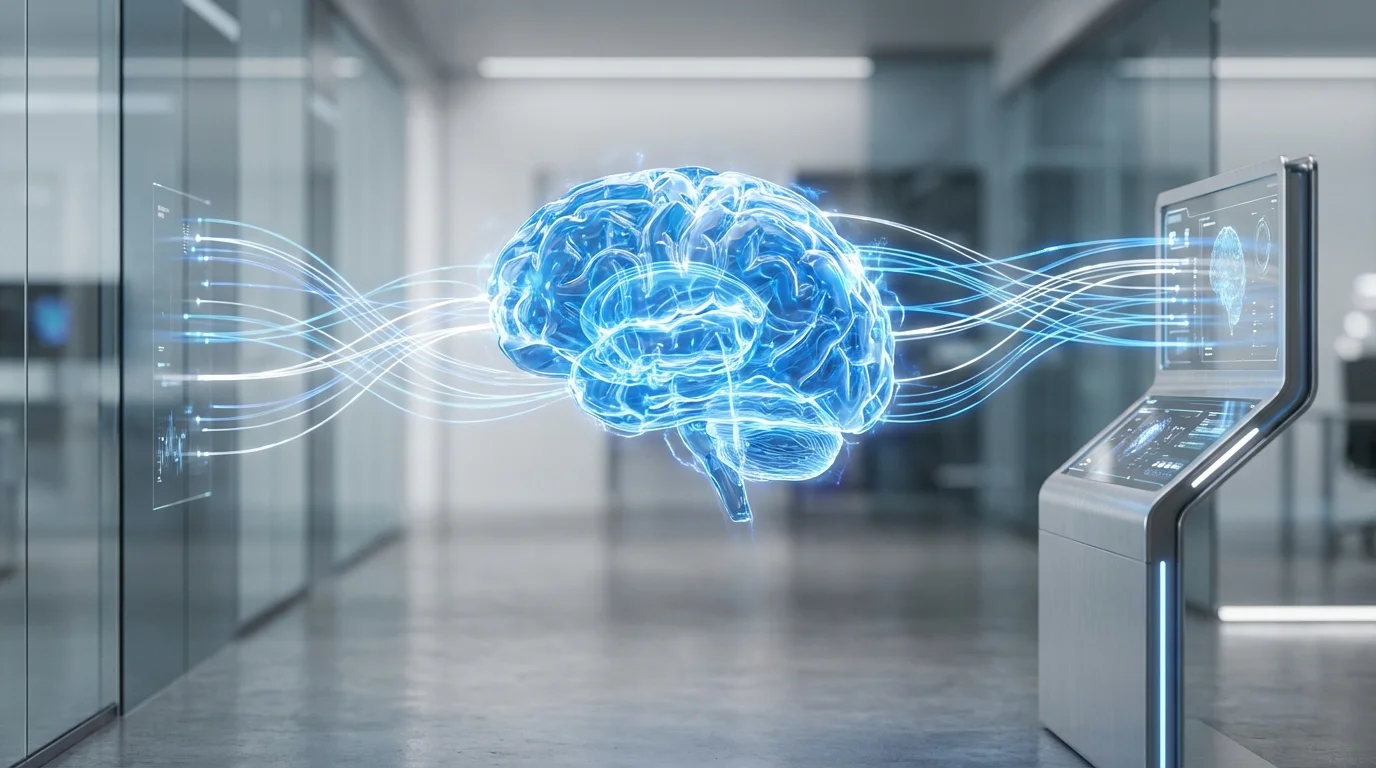
In January 2024, Neuralink implanted its first brain-computer interface in a human patient. Within weeks, Noland Arbaugh — a 29-year-old quadriplegic — was controlling a computer cursor with his thoughts, playing chess, browsing the web, and streaming video games. The images of a paralyzed man navigating a screen using only his mind were striking. They were also just the beginning.
Brain-computer interfaces — devices that create a direct communication pathway between the brain and external technology — have been the subject of science fiction for decades. But in 2026, BCIs are crossing the threshold from experimental curiosity to practical medical technology, with implications that extend far beyond the laboratory.
This is a thorough examination of where BCI technology actually stands, what it can and cannot do, the medical breakthroughs on the horizon, the ethical questions we must confront, and a realistic timeline for when this technology might affect your life.
What Brain-Computer Interfaces Actually Are
At the most fundamental level, a brain-computer interface reads electrical signals produced by neurons in the brain and translates them into commands that control external devices. Some BCIs also work in reverse, sending information into the brain through electrical stimulation.
Your brain contains roughly 86 billion neurons, each firing electrical impulses to communicate with other neurons. These patterns of electrical activity correspond to thoughts, intentions, perceptions, and actions. A BCI captures some subset of this activity and decodes it into useful information.
The concept is straightforward. The engineering is extraordinarily difficult.
Types of BCIs
BCIs fall into three broad categories based on how they access brain signals.
Invasive BCIs require surgery to place electrodes directly on or within the brain. These offer the highest signal quality because they are physically close to neurons. Utah arrays (small grids of electrodes), electrocorticography (ECoG) strips placed on the brain's surface, and Neuralink's flexible thread electrodes are all examples. The signal quality is excellent, but surgery carries inherent risks including infection, bleeding, and tissue damage.
Partially invasive BCIs are placed inside the skull but outside the brain tissue itself. These offer a middle ground between signal quality and surgical risk. Synchron's Stentrode, which is inserted through a blood vessel and deployed in the brain's motor cortex without open brain surgery, represents this category.
Non-invasive BCIs sit outside the skull entirely. Electroencephalography (EEG) headsets are the most common, reading electrical activity through the scalp. Functional near-infrared spectroscopy (fNIRS) measures blood oxygenation changes associated with neural activity. These are the safest option but provide much lower signal quality — the skull acts as a significant filter, blurring the neural signals.
The trade-off between signal quality and invasiveness is the central tension in BCI design, and different applications call for different positions on this spectrum.
The Current State of the Technology
BCI technology in 2026 is far more advanced than most people realize, but also far more limited than headlines suggest.
Neuralink: The High-Profile Player
Neuralink's N1 implant uses 1,024 electrodes on 64 ultra-thin flexible threads, inserted into the motor cortex by a custom surgical robot. The device is fully implanted — no wires penetrate the skull — and communicates wirelessly with external devices.
After the first human implant in early 2024, Neuralink expanded its PRIME study to additional participants. The results have been impressive for motor control applications: participants can control cursors, type text, and interact with software at speeds approaching and sometimes exceeding traditional assistive technologies like eye-tracking systems.
Neuralink's contribution is not necessarily in fundamental science — academic labs have demonstrated similar capabilities for years — but in engineering miniaturization, wireless communication, and scalable manufacturing. The company is pursuing FDA approval for broader medical use, focusing initially on quadriplegia and ALS patients.
BrainGate: The Pioneer
The BrainGate consortium, led by researchers at Brown University, Stanford, and Massachusetts General Hospital, has been conducting human BCI trials since 2004. BrainGate demonstrated many capabilities years before Neuralink — including enabling paralyzed individuals to control robotic arms, type text, and navigate computers.
BrainGate's system uses a Utah array (a small grid of 96 electrodes) implanted in the motor cortex. While less sophisticated than Neuralink's hardware, BrainGate has accumulated far more clinical experience and published research, providing the scientific foundation that the entire field builds upon.
Synchron: The Less Invasive Path
Synchron's Stentrode takes a fundamentally different approach. Instead of opening the skull, the device is threaded through a blood vessel (the jugular vein) and navigated to a position adjacent to the motor cortex, similar to how a cardiac stent is implanted. Once in place, it reads neural signals through the blood vessel wall.
The signal quality is lower than direct brain implants, but the procedure is dramatically less invasive — patients can go home the same day. Synchron has multiple patients in its clinical trial and has demonstrated cursor control, text messaging, and online shopping capabilities.
For many patients, the lower risk of Synchron's approach may outweigh the lower signal quality, particularly for applications where precise, high-bandwidth neural decoding is not essential.
Non-Invasive Progress
Non-invasive BCIs have seen significant improvement through better hardware and, crucially, AI-powered signal processing. Modern EEG-based BCIs use machine learning to extract meaningful signals from the noisy data captured through the skull.
Companies like Emotiv, OpenBCI, and NextMind (acquired by Snap) offer consumer-grade EEG devices that can detect basic mental states, enable simple control inputs, and provide neurofeedback. These are not capable of reading thoughts or providing fine motor control, but they are useful for specific applications — attention monitoring, meditation guidance, basic device control, and research.
The gap between non-invasive and invasive BCIs in terms of capability remains vast. But for applications where simple binary choices or gross mental state detection are sufficient, non-invasive BCIs are practical today.
Medical Applications: Where BCIs Are Saving Lives
The most immediate and compelling applications for BCIs are medical, addressing conditions where conventional treatments fall short.
Restoring Movement for Paralysis
The flagship BCI application is restoring communication and movement for people with paralysis. For individuals with spinal cord injuries, ALS, locked-in syndrome, or severe stroke, BCIs offer a pathway to interact with the world that no other technology can provide.
Current systems enable paralyzed individuals to control computer cursors, type text (at speeds of 15-40 words per minute, approaching conversational pace), browse the internet, control smart home devices, and operate robotic arms. For someone who has lost all voluntary movement, this capability is transformative.
The next frontier is restoring actual movement through functional electrical stimulation (FES). BCI-controlled FES systems read the patient's intended movement from brain signals and electrically stimulate the appropriate muscles to produce that movement. Early clinical trials have demonstrated paralyzed patients grasping objects and performing arm movements through this approach.
Treating Depression
Deep brain stimulation (DBS) — a form of invasive BCI — has shown remarkable results for treatment-resistant depression. Traditional DBS delivers constant electrical stimulation to brain regions involved in mood regulation. Newer closed-loop systems monitor neural activity and deliver stimulation only when depression-related patterns are detected.
A landmark trial at UCSF published in Nature Medicine demonstrated that a personalized closed-loop DBS system dramatically reduced depression symptoms in patients who had failed to respond to multiple other treatments. The system identified each patient's unique neural biomarker for depression onset and delivered targeted stimulation in response.
This approach — reading the brain's state and responding in real time — represents a fundamentally new paradigm for treating neurological and psychiatric conditions.
Managing Epilepsy
The NeuroPace RNS System is one of the most mature closed-loop BCIs in clinical use. Implanted in patients with drug-resistant epilepsy, it continuously monitors brain activity for seizure patterns and delivers electrical stimulation to disrupt seizures before they fully develop.
The system has been FDA-approved since 2013 and has been implanted in thousands of patients. Long-term data shows that seizure frequency continues to improve over years of use, with many patients experiencing 50-75% reduction in seizures. For some patients, seizures are virtually eliminated.
Restoring Hearing and Vision
Cochlear implants — devices that convert sound into electrical signals delivered directly to the auditory nerve — are the most successful BCI in history, with over one million people using them worldwide. While not typically framed as a "brain-computer interface," that is precisely what they are.
Visual prostheses are far less mature. Several research groups and companies (including Second Sight, which unfortunately ceased operations, and newer entrants like Science Corporation founded by former Neuralink co-founder Max Hodak) are developing retinal and cortical implants to restore some degree of vision. Current devices provide low-resolution perception — patterns of light and dark rather than detailed images — but represent a starting point.
Treating Movement Disorders
Deep brain stimulation for Parkinson's disease is another established BCI application, with over 200,000 patients treated worldwide. DBS reduces tremor and improves motor function by delivering electrical stimulation to specific brain regions. Newer adaptive DBS systems adjust stimulation in real time based on neural feedback, improving efficacy and reducing side effects.
Current Capabilities vs. the Hype
The media coverage of BCIs often implies capabilities that are years or decades away from reality. An honest assessment of current limitations is essential.
What BCIs Can Do Now
- Control computer cursors and type text using thought alone (invasive systems)
- Enable basic communication for individuals with severe paralysis
- Reduce seizure frequency in drug-resistant epilepsy
- Restore hearing through cochlear implants
- Reduce symptoms of Parkinson's disease and treatment-resistant depression through DBS
- Detect basic mental states (attention, relaxation, concentration) non-invasively
What BCIs Cannot Do Now
- Read thoughts or memories
- Transfer knowledge or skills to the brain
- Enable brain-to-brain communication
- Enhance cognitive abilities in healthy individuals
- Provide high-bandwidth sensory replacement (full vision restoration, etc.)
- Work reliably outside controlled clinical settings for invasive systems
The Signal Quality Gap
The fundamental limitation is bandwidth. The human brain processes information at an estimated rate equivalent to millions of bits per second. Current invasive BCIs capture a few hundred neurons' worth of data. Even Neuralink's 1,024 electrodes are sampling a tiny fraction of available neural activity.
This bandwidth limitation means BCIs can decode intended movements and basic communication, but cannot access the rich complexity of human thought, memory, or perception. The gap between current capability and "reading thoughts" is enormous — not a few years of improvement, but potentially a fundamental barrier related to how information is represented in neural activity.
Ethical Concerns and Privacy Implications
As BCI technology advances, it raises ethical questions that society has barely begun to address.
Mental Privacy
If a device can read neural signals associated with intended actions, what prevents it from reading signals associated with other mental states — emotional reactions, truthfulness, political opinions, or unconscious biases? The concept of "mental privacy" — the right to keep your thoughts private — has no legal framework in most jurisdictions.
Current BCIs are far too limited to read complex thoughts. But the trajectory of the technology demands proactive ethical frameworks rather than reactive responses. The Rafael Yuste Lab at Columbia University and the NeuroRights Foundation have proposed specific protections including the right to mental privacy, the right to personal identity, the right to free will, and the right to fair access to cognitive enhancement technologies.
Chile became the first country to pass neuroright legislation in 2021, amending its constitution to protect brain activity and the information derived from it. Other countries are watching this experiment with interest.
Informed Consent for Implants
Brain implants are fundamentally different from other medical devices because they interact with the organ that constitutes personal identity. Questions about informed consent become especially complex when the device may alter mood, personality, or decision-making.
Patients in DBS studies for depression have reported changes in personality and sense of identity — feeling like a different person with the device on versus off. This raises questions about which version of the person is "authentic" and whether consent given before implantation remains valid when the device changes how the patient thinks and feels.
Data Ownership and Security
Neural data is arguably the most sensitive data that exists. Who owns the neural data generated by a BCI? Can a BCI company collect, analyze, or sell neural data? What happens to neural data if a company goes bankrupt? Can neural data be subpoenaed by law enforcement?
These questions are not hypothetical. Companies developing consumer-grade EEG devices already collect neural data, and their data practices vary. As BCIs become more capable, the sensitivity of this data increases exponentially.
Access and Equity
If BCIs eventually provide cognitive enhancements — improved memory, faster processing, direct information access — who gets access? The history of technology suggests that enhancements initially available to the wealthy would create new dimensions of inequality.
The medical applications are more straightforward — restoring lost function is a clear medical need. But the line between restoration and enhancement is blurry, and how society navigates that line will have profound implications.
Corporate Control
Many leading BCI companies are venture-funded startups with commercial motivations. Neuralink is controlled by Elon Musk. The incentive structures of Silicon Valley — rapid growth, engagement optimization, data monetization — are concerning when applied to technology that directly interfaces with the human brain.
Robust regulatory frameworks, independent oversight, and open scientific review are essential to ensure that commercial interests do not override patient safety and ethical considerations.
Timeline for Consumer Applications
The question many people ask is: when will I be able to get a brain implant? The honest answer is nuanced.
Medical Applications (Available Now - 2030)
Cochlear implants and DBS for Parkinson's and epilepsy are available now. BCI-assisted communication for paralysis patients is in late-stage clinical trials and will likely receive broader approval by 2027-2028. DBS for treatment-resistant depression is progressing through clinical trials with potential approval by 2028-2030.
These are medical devices for people with medical conditions, implanted by neurosurgeons in clinical settings. They are not consumer products.
Therapeutic Enhancement (2030 - 2035)
The grey area between treatment and enhancement will emerge in this timeframe. Memory assistance for early-stage dementia, attention enhancement for ADHD, and mood regulation for chronic depression could push BCIs from strictly medical devices toward broader therapeutic use.
Regulatory frameworks will need to evolve to address these applications, which do not fit neatly into traditional medical device categories.
Consumer Non-Invasive BCIs (2027 - 2030)
Non-invasive BCIs for specific consumer applications will appear sooner, though with limited capabilities. Expect EEG-based devices for focus enhancement, sleep optimization, meditation guidance, and basic hands-free control of devices. These will be niche products — useful for specific applications but not transformative for the general population.
Consumer Invasive BCIs (2035+)
Healthy individuals voluntarily undergoing brain surgery for enhancement purposes is at least a decade away, if it happens at all. The risks of brain surgery — even minimally invasive approaches — are too high relative to the benefits for people without medical conditions. This timeline depends on dramatic improvements in implant safety, longevity, and capability, as well as societal acceptance.
The often-cited vision of humans merging with AI through BCIs remains firmly in the speculative future. The technical, medical, ethical, and regulatory barriers are immense.
Regulatory Challenges
BCI regulation is complex because these devices span multiple regulatory categories.
Medical Device Regulation
In the US, invasive BCIs are regulated by the FDA as Class III medical devices — the highest-risk category. The approval process requires extensive clinical trials demonstrating safety and efficacy. This process is necessarily slow and is appropriate for devices that interact directly with the brain.
Neuralink received FDA Breakthrough Device designation, which expedites review without lowering safety standards. Other BCI companies are pursuing similar pathways. The FDA has been generally supportive while maintaining rigorous safety requirements.
Consumer Device Gaps
Non-invasive BCIs sold as wellness or consumer devices may fall outside traditional medical device regulation, creating a gap. An EEG headset marketed for "focus enhancement" might avoid FDA oversight entirely, even though it reads brain data and makes claims about neural states.
This regulatory gap needs to be addressed before the consumer BCI market grows significantly.
International Variation
Regulatory approaches vary globally. The EU's Medical Device Regulation (MDR) is more stringent than the US in some respects. China has a separate regulatory framework that may enable faster deployment with different safety standards. This variation creates challenges for companies operating globally and raises concerns about regulatory arbitrage.
The Fundamental Question
Brain-computer interfaces force us to confront a fundamental question about the relationship between humans and technology. Every previous technology — from writing to computers to smartphones — has been external to our bodies and minds. BCIs cross that boundary, creating a direct interface between silicon and neurons, between code and consciousness.
This is not inherently good or bad. Cochlear implants have given hearing to hundreds of thousands of people who would otherwise live in silence. DBS has restored quality of life to patients with debilitating neurological conditions. The medical case for BCIs is compelling and will only strengthen as the technology matures.
But the path from medical necessity to consumer enhancement is one that demands careful thought. The decisions we make now — about privacy protections, regulatory frameworks, access equity, and ethical boundaries — will shape how this technology affects humanity for generations.
The science fiction future of seamless brain-computer merger is not around the corner. What is around the corner is a set of medical technologies that will genuinely transform the lives of people with neurological conditions. That is not as dramatic as telepathy or superhuman cognition, but it is real, it is happening now, and it is extraordinary.
The story of brain-computer interfaces is ultimately a story about the boundary between human and machine. That boundary is not dissolving — it is being carefully, incrementally, and sometimes controversially redrawn. How we manage that redrawing may be one of the most consequential technological decisions of the 21st century.