
Future of Remote Work: 6 Tools Making Offices Obsolete

Alex Rivera
February 4, 2026
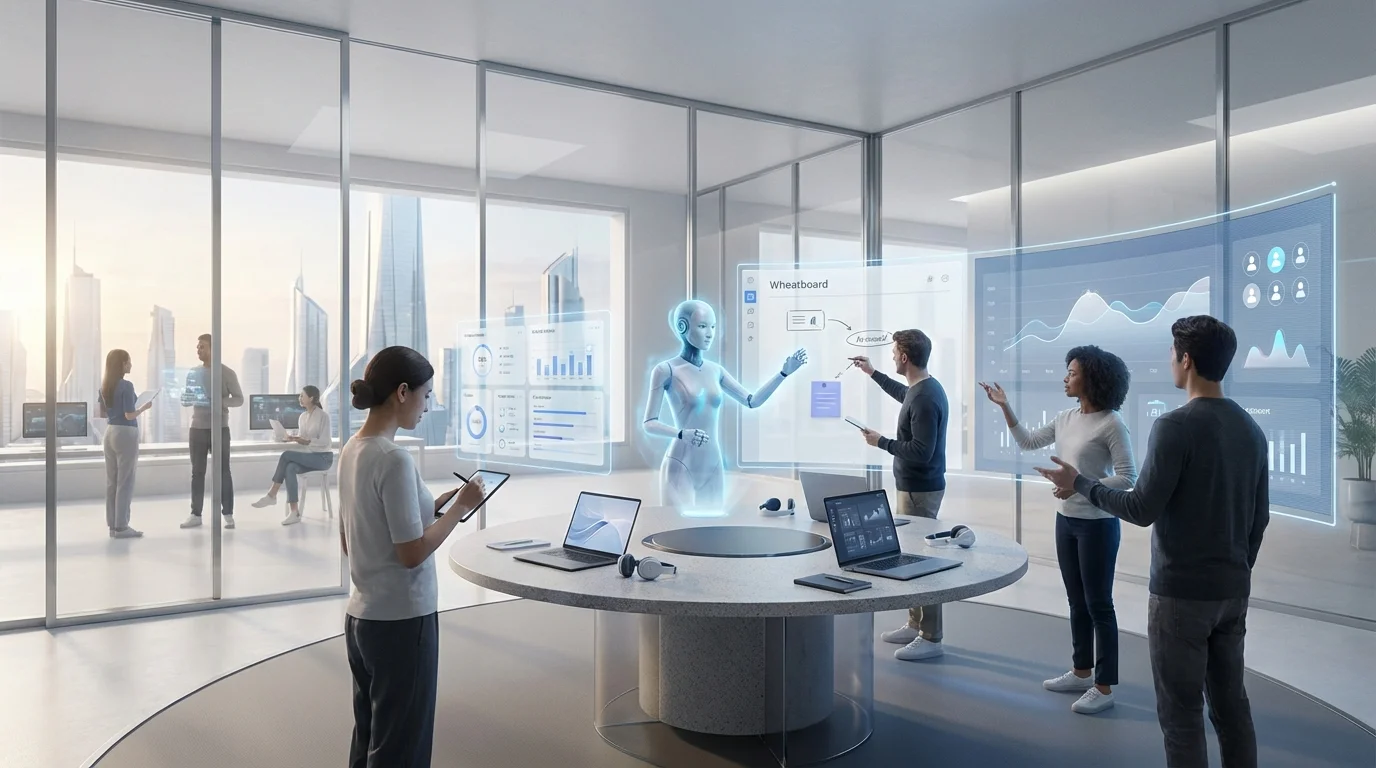
The great remote work experiment of 2020 permanently changed how the world thinks about work. Six years later, the debate has shifted from "should we allow remote work?" to "how do we make distributed work actually work well?" The answer lies largely in technology — and the next generation of tools will make the remote work of 2026 look primitive by 2030.
We analyzed workplace technology trends, surveyed emerging tools, and examined how organizations from startups to Fortune 500 companies are investing in the future of distributed work. The results paint a picture of work that is more flexible, more productive, and more human than either the traditional office or the early pandemic-era remote setup.
Where Remote Work Stands in 2026
The numbers tell a clear story: remote and hybrid work are permanent features of the professional landscape.
The current breakdown:
- 25-30% of knowledge workers are fully remote
- 40-50% work in hybrid arrangements
- 20-35% are fully in-office (down from 60% pre-pandemic)
These numbers vary dramatically by industry. Technology, finance, and professional services lean heavily remote. Healthcare, manufacturing, retail, and hospitality remain predominantly in-person.
The productivity debate is settled for most practical purposes. Studies consistently show that remote and hybrid workers are as productive or more productive than their in-office counterparts for most knowledge work tasks. Where remote work struggles — spontaneous collaboration, mentoring, and culture-building — is where technology is making the most progress.
AI-Powered Collaboration: The Biggest Shift
AI Meeting Assistants
Meetings are the most frequently cited frustration in remote work. AI is systematically addressing every pain point:
Before the meeting: AI reviews your calendar, relevant documents, and previous meeting notes to prepare a briefing. It suggests agenda items based on open action items and project status.
During the meeting: Real-time transcription with speaker identification is now table stakes. AI also provides live summaries, flags when the conversation drifts from the agenda, and identifies action items as they are discussed.
After the meeting: AI generates structured meeting notes, distributes action items with assigned owners and deadlines, and schedules follow-ups. The notes are searchable and linked to relevant project documents.
The practical impact is substantial — remote workers report saving 5-8 hours per week on meeting-related tasks. More importantly, the quality of meeting follow-through improves dramatically when action items are automatically tracked.
Asynchronous Communication Gets Smarter
The biggest challenge of distributed work across time zones is not technology — it is communication. When your team spans 12 time zones, synchronous meetings become impractical. AI is making asynchronous communication far more effective:
Intelligent message routing: AI determines which messages need immediate attention and which can wait, reducing notification fatigue while ensuring urgent issues are not missed.
Context-aware summaries: When you start your workday, AI summarizes everything that happened while you were away, prioritized by relevance to your work. You get the context you need in minutes rather than spending an hour reading through message threads.
Translation and cultural adaptation: Real-time translation in messaging platforms makes multilingual teams seamless. More subtly, AI can adapt communication style to account for cultural differences — directness, formality, and context levels that vary across cultures.
Video message enhancement: Short recorded video messages are increasingly replacing lengthy written communications. AI enhances these with automatic captioning, chapter markers, speed controls, and searchable transcripts.
Collaborative AI Workspaces
The next generation of collaboration tools integrates AI directly into the workspace:
Smart documents that update themselves — pulling in the latest data, reformatting based on context, and highlighting sections that need attention.
Project dashboards where AI tracks progress across tools, identifies bottlenecks, predicts timeline risks, and suggests resource reallocation.
Knowledge bases that organize themselves — AI tags, categorizes, and connects information across documents, conversations, and projects, making institutional knowledge searchable and discoverable.
The Spatial Computing Promise
Virtual Office Spaces
Virtual reality and spatial computing are moving from novelty to utility for remote teams. The technology is not about replacing in-person interaction — it is about providing a middle ground between video calls and face-to-face meetings.
Current state: Meta's Quest, Apple Vision Pro, and competitors offer immersive meeting experiences where remote participants feel genuinely present. The technology is good enough for focused work sessions and team meetings, though not yet comfortable for all-day use.
What is improving: Lighter headsets, better hand and facial tracking, higher resolution, and longer battery life are all advancing rapidly. By 2028, expect headsets comparable to wearing a pair of sunglasses rather than today's bulky hardware.
Practical applications emerging now:
- Virtual whiteboards where distributed teams brainstorm as naturally as in a conference room
- 3D design reviews where engineers examine products together from any location
- Training simulations where new employees learn in immersive environments
- Virtual coworking spaces that recreate the ambient presence of an office
The Holographic Meeting Vision
Holographic telepresence — appearing as a 3D projection in someone else's physical space — is transitioning from science fiction to early reality. Cisco, Microsoft, and several startups are developing systems where remote participants appear as lifelike holograms in meeting rooms.
This technology is currently expensive and limited, but it addresses the core limitation of video calls: the inability to make eye contact, read body language naturally, and feel present in the same space. By 2030, holographic meetings will be available for high-value interactions — executive meetings, sales presentations, and medical consultations.
The Digital Infrastructure of Remote Work
Network Improvements
Reliable, fast internet is the foundation of remote work, and the infrastructure is improving significantly:
5G expansion provides mobile broadband speeds sufficient for video calls, cloud applications, and real-time collaboration from almost anywhere.
Starlink and satellite internet bring usable broadband to rural areas and developing countries, expanding the geographic pool of potential remote workers.
Wi-Fi 7 delivers speeds and reliability that make working from home indistinguishable from working in a well-equipped office.
Cloud-Native Everything
The shift to cloud-native applications accelerates remote work capabilities:
Zero-trust security replaces the traditional office network perimeter. Workers access resources securely from any location, any device, based on identity verification rather than network location.
Virtual desktops provide consistent, powerful computing environments accessible from any device. A Chromebook becomes as capable as a high-end workstation when the actual computing happens in the cloud.
Edge computing places processing power closer to users geographically, reducing latency for real-time applications like video conferencing and collaborative editing.
Monitoring vs. Trust: The Cultural Divide
The Surveillance Approach
Some organizations have responded to remote work with increased surveillance — keystroke logging, screenshot monitoring, mouse movement tracking, and productivity scoring. This approach is counterproductive for several well-documented reasons:
It measures activity, not output. An employee who solves a complex problem in two focused hours produces more value than one who clicks randomly for eight hours.
It destroys trust and morale. Employees who feel surveilled report higher stress, lower job satisfaction, and greater likelihood of leaving.
It selects for appearance over substance. Workers optimize for looking busy to the monitoring software rather than doing meaningful work.
The Outcomes-Based Approach
The most successful remote organizations have shifted to outcomes-based management:
Clear goals and metrics: Teams agree on what success looks like, and progress is measured against those goals rather than hours logged.
Regular check-ins: Short, focused meetings to discuss progress, obstacles, and priorities. Not micromanagement — alignment.
Transparency by default: Work happens in shared spaces (project boards, shared documents, public channels) so visibility is natural rather than forced.
Trust as default: Assume people are working effectively unless results suggest otherwise. The vast majority of remote workers are self-motivated and productive.
Technology supports this approach through project management tools, goal-tracking platforms, and transparent communication channels — not through surveillance software.
The Hybrid Challenge
Making Hybrid Work Actually Work
Hybrid work — splitting time between home and office — is the dominant model but also the hardest to execute well. The core challenge is ensuring remote participants are not second-class citizens when some people are in the room together.
Technology solutions emerging:
Intelligent meeting rooms with AI-powered cameras that frame speakers automatically, spatial audio that places remote participants in the conversation naturally, and digital whiteboards that capture in-room writing and share it in real time.
Scheduling intelligence that optimizes which days teams are in the office together, maximizing the value of in-person time while respecting individual flexibility.
Equalized communication where important discussions and decisions happen in written, accessible formats rather than hallway conversations that exclude remote workers.
The Three-Day Office
The emerging standard for hybrid work is 2-3 required office days per week, typically Tuesday through Thursday. These days focus on collaboration, mentoring, and social connection. Remote days focus on deep work requiring concentration.
Technology supports this pattern with tools that distinguish between collaboration days (meeting-heavy, interactive) and focus days (notification-minimal, deep work-optimized).
The Global Workforce Implications
Talent Without Borders
Remote work has fundamentally expanded the talent pool. Companies can hire the best person for any role regardless of location. This has significant implications:
For employers: Access to global talent, often at lower cost. But managing across time zones, cultures, and legal jurisdictions adds complexity.
For workers in high-cost cities: Increased competition from equally qualified workers in lower-cost locations. Compensation models are evolving — some companies pay based on location, others pay based on role regardless of location.
For workers in developing regions: Unprecedented access to high-paying jobs at global companies without relocating. This could be the most significant economic development story of the decade.
Legal and Tax Complexity
The legal infrastructure for a global remote workforce is still catching up:
Employment law varies dramatically across countries. What constitutes an employee versus a contractor, required benefits, termination protections, and working time regulations differ in every jurisdiction.
Tax implications for both companies and workers are complex when work happens across borders. Where is income taxed? Where must the company register? These questions do not have simple answers.
Employer of Record (EOR) services have emerged to handle this complexity, allowing companies to legally employ workers in countries where they have no legal entity. This market is growing rapidly as global remote hiring increases.
What Workers Need to Thrive Remotely
Physical Setup
The basics matter more than most people realize:
Ergonomic workspace: A dedicated desk, proper chair, external monitor, and good lighting are not luxuries — they are essential for long-term health and productivity.
Reliable internet: At minimum 50 Mbps download and 10 Mbps upload for comfortable video calls and cloud application use. Backup connectivity (mobile hotspot) for critical meetings.
Good audio: A quality microphone and headset matter more than video quality for remote communication. Being heard clearly is more important than being seen clearly.
Digital Skills
Remote work demands higher digital literacy:
Asynchronous communication: The ability to write clearly, concisely, and with appropriate context is critical when you cannot tap someone on the shoulder for clarification.
Self-management: Without the external structure of an office, effective remote workers create their own routines, manage their time deliberately, and maintain boundaries between work and personal life.
Tool proficiency: Comfort with collaboration tools, project management platforms, cloud applications, and AI assistants is baseline competence for remote work.
Frequently Asked Questions
Is remote work actually as productive as office work? For most knowledge work tasks, yes. Research consistently shows equal or higher productivity for remote and hybrid workers compared to fully in-office workers. Where remote work struggles — spontaneous collaboration and mentoring — technology is rapidly improving.
Will companies force everyone back to the office? Some have tried, often losing talent in the process. The trend is toward flexibility, not mandated office presence. Companies that offer remote options have significant advantages in hiring and retention.
What jobs will be remote in 2030? Most knowledge work will offer remote or hybrid options. Jobs requiring physical presence — healthcare, manufacturing, retail, construction — will remain primarily in-person but will use technology to reduce unnecessary travel and meetings.
How do I stay visible and advance my career remotely? Document and share your work proactively. Participate actively in meetings and communication channels. Build relationships intentionally — schedule virtual coffee chats, attend in-person events when possible, and volunteer for cross-functional projects that increase your visibility.
The Bottom Line
The future of remote work is not about choosing between office and home — it is about using technology to work effectively from wherever makes the most sense for the task at hand. AI, spatial computing, improved infrastructure, and better management practices are making distributed work increasingly natural, productive, and human.
The organizations that will thrive are those that embrace flexibility, invest in the right technology, and focus on outcomes rather than presence. The workers who will thrive are those who develop strong digital communication skills, maintain their professional networks, and use AI tools to maximize their productivity. The future of work is distributed, flexible, and technology-enabled — and it is arriving faster than most predictions suggest.