
Self-Driving Cars: An Honest Timeline (No Hype)

Alex Rivera
January 31, 2026
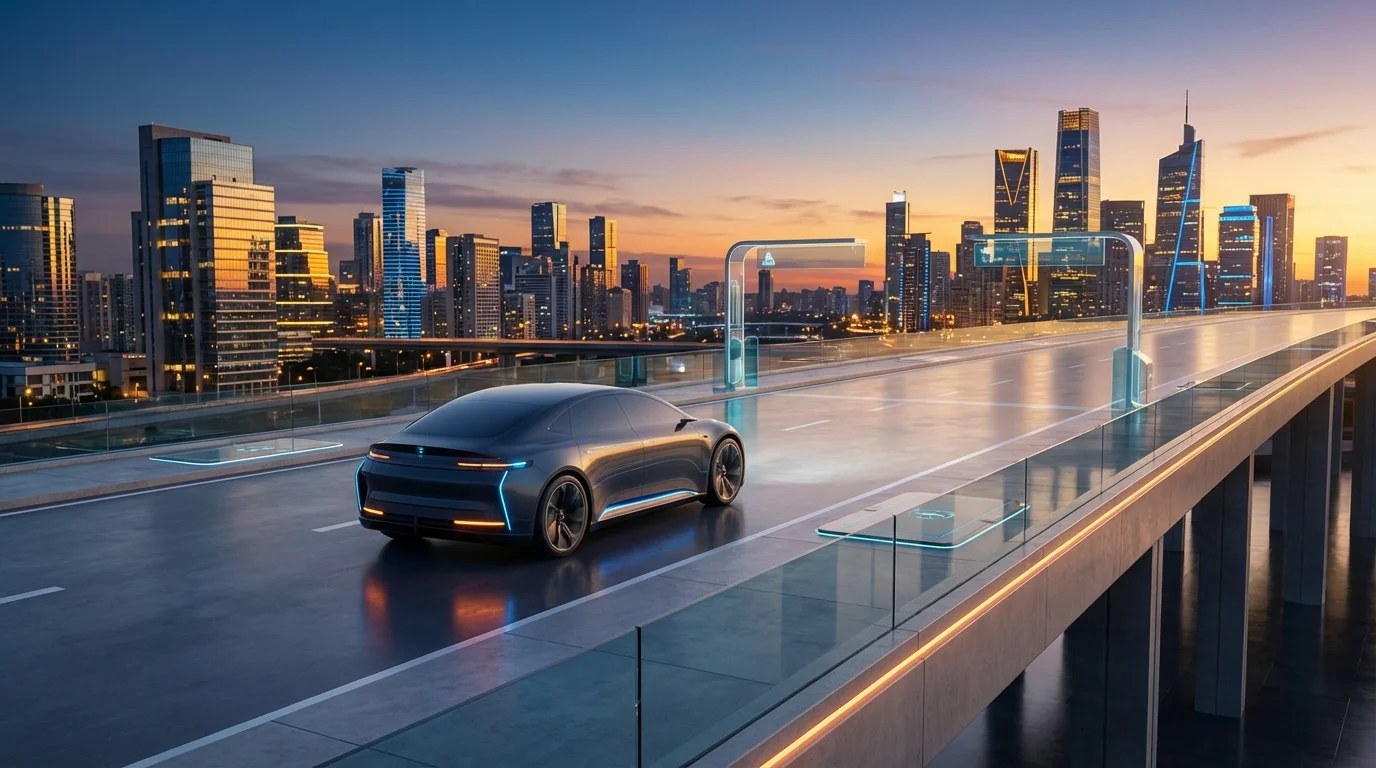
Self-driving cars have been "five years away" for the past fifteen years. The technology was supposed to eliminate traffic accidents, end the need for parking lots, and transform transportation by now. Instead, we are still waiting — and the timeline keeps shifting.
But calling autonomous vehicles vaporware would be wrong. Robotaxis operate in several US cities today. Autonomous trucks are hauling freight on highways. And the technology is genuinely advancing, just not at the pace the hype promised. The real story of self-driving cars is more complex, more interesting, and more honest than either the breathless optimism or the cynical dismissal.
Where Self-Driving Technology Actually Stands
The Levels of Autonomy
The automotive industry uses a 0-5 scale to classify driving automation:
Level 0 — No Automation: The human does everything. Most cars before 2010.
Level 1 — Driver Assistance: The car helps with one thing at a time — adaptive cruise control OR lane keeping. The driver is fully in control. Most new cars today have Level 1 features.
Level 2 — Partial Automation: The car handles steering AND acceleration/braking simultaneously, but the driver must stay engaged and ready to take over. Tesla Autopilot, GM Super Cruise, and Ford BlueCruise are Level 2 systems. This is where most consumer vehicles top out today.
Level 3 — Conditional Automation: The car drives itself in specific conditions, and the driver can look away — but must be ready to take over when the system requests. Mercedes Drive Pilot is the first commercially available Level 3 system, but it only operates on certain highways at speeds below 40 mph. This is a significant legal and technical milestone — the car manufacturer accepts liability when the system is active.
Level 4 — High Automation: The car drives itself in defined areas or conditions with no human intervention needed. If it encounters something it cannot handle, it safely pulls over rather than asking the human to take over. Waymo's robotaxis operate at Level 4 in specific geographic areas.
Level 5 — Full Automation: The car drives itself everywhere a human could, in all conditions. No steering wheel needed. This does not exist and is the hardest challenge to solve.
What Is Working Today
Robotaxis in geofenced areas: Waymo (Alphabet's self-driving subsidiary) operates commercial robotaxi services in Phoenix, San Francisco, Los Angeles, and Austin. These are real services carrying real passengers — over 150,000 paid rides per week. The vehicles navigate complex urban environments including construction zones, emergency vehicles, and unpredictable pedestrian behavior.
Highway autonomous trucking: Companies like Aurora, Kodiak Robotics, and TuSimple are operating autonomous trucks on specific highway routes. Highway driving is simpler than urban driving — controlled access, predictable traffic patterns, well-maintained roads — making it a practical first application for commercial autonomous vehicles.
Advanced driver assistance: Level 2 systems from Tesla, GM, Ford, and others handle highway driving (steering, speed, lane changes) with increasing reliability. These systems reduce driver fatigue and are measurably safer than unassisted driving on highways, even though they require human supervision.
Low-speed autonomous vehicles: Shuttles, delivery robots, and campus vehicles operate autonomously at low speeds in controlled environments — airports, university campuses, retirement communities, and warehouse districts.
What Is Not Working (Yet)
Anywhere-to-anywhere urban driving: Self-driving cars still struggle with the "long tail" of rare, unusual situations — a traffic officer giving hand signals, a child chasing a ball into the street, construction creating novel road configurations, or adverse weather conditions. Humans handle these intuitively; AI requires specific training for each scenario.
Bad weather: Rain, snow, fog, and glare significantly degrade sensor performance. Cameras see poorly in rain. Lidar struggles with snow. Radar has limited resolution. No current sensor suite handles severe weather as well as an experienced human driver.
Dense urban chaos: Environments where pedestrians, cyclists, scooters, vehicles, and unexpected obstacles interact in complex, unpredictable ways remain the hardest challenge. Think of a busy intersection in Ho Chi Minh City or Mumbai — human drivers navigate through social cues and negotiation that current AI cannot replicate.
Cost: The sensor suite on a Waymo vehicle costs tens of thousands of dollars. While costs are declining rapidly, achieving Level 4 autonomy at consumer price points remains a significant challenge.
The Companies to Watch
Waymo (Alphabet/Google)
Approach: Cautious, systematic, focused on getting it right rather than getting it first. Uses lidar, cameras, and radar in a comprehensive sensor suite.
Status: The clear leader in commercial robotaxi deployment. Operating paid services in multiple US cities with plans to expand. Has completed over 20 million miles of autonomous driving on public roads.
Strength: More real-world autonomous driving data than any competitor. Conservative approach to expansion means fewer incidents that could set back public trust.
Challenge: Extremely expensive per-vehicle cost. Limited to specific cities with pre-mapped, well-maintained roads.
Tesla
Approach: Camera-only (no lidar), leveraging data from millions of Tesla vehicles to train AI. Pursuing a "software-first" approach that aims to achieve autonomy through neural networks trained on massive driving data.
Status: Full Self-Driving (FSD) is Level 2 — despite the name, it requires constant human supervision. Tesla has announced plans for a dedicated robotaxi vehicle (Cybercab) but has missed multiple self-driving timelines in the past.
Strength: Unmatched fleet data — millions of Tesla vehicles generate driving data continuously. If the camera-only approach can achieve full autonomy, Tesla's cost advantage would be enormous.
Challenge: The camera-only approach may have fundamental limitations in adverse conditions. Repeated missed timelines have created credibility questions. FSD has been involved in incidents that raise safety concerns.
Cruise (GM)
Approach: Similar to Waymo with a comprehensive sensor suite, focused on urban robotaxi service.
Status: Suffered a significant setback in October 2023 when a Cruise robotaxi dragged a pedestrian who had been hit by a separate human-driven car. Operations were suspended nationally, and the company underwent leadership changes. Gradually restarting operations with enhanced safety protocols.
Lesson: A single serious incident can set back an entire program by years. Public trust is fragile, and the standard for autonomous vehicles is effectively "perfect" — a standard human drivers would not meet.
Aurora Innovation
Approach: Focused on autonomous trucking, which is commercially compelling and technically more tractable than urban robotaxi service.
Status: Operating commercial autonomous truck routes in Texas. The highway-focused approach avoids the most difficult edge cases of urban driving while addressing a genuine market need — the US faces a shortage of 80,000 truck drivers.
Strength: Trucking has a clearer path to profitability than robotaxis. Highway driving is a more constrained and predictable environment.
Chinese Companies (Baidu Apollo, Pony.ai, WeRide)
Approach: Operating robotaxi services in Chinese cities with regulatory support from the Chinese government.
Status: Baidu's Apollo Go operates in multiple Chinese cities with millions of rides completed. China's regulatory environment is more permissive than the US for autonomous vehicle testing and deployment.
Significance: China is ahead of the US in terms of scale of deployment, if not technology. The country's willingness to allow extensive real-world testing accelerates development but raises questions about safety standards.
The Economics of Self-Driving
Why It Matters Financially
The economic case for autonomous vehicles is compelling, which is why billions continue to be invested despite slow progress:
Trucking: A human truck driver costs $60,000-80,000 per year and can legally drive about 11 hours per day. An autonomous truck operates 20+ hours per day with no labor cost. For long-haul trucking, the economics are overwhelming once the technology works reliably.
Robotaxis: The average personally-owned car sits parked 95% of the time. A robotaxi operates continuously, dramatically reducing the number of vehicles needed to serve a population. Ride costs could eventually drop to $0.25-0.50 per mile compared to $2-3 per mile for current ride-hailing — cheaper than car ownership for most people.
Delivery: Autonomous delivery vehicles and robots could reduce last-mile delivery costs by 70-80%, transforming e-commerce economics.
The Transition Costs
Getting there requires enormous investment:
Technology development: The major self-driving companies have collectively spent over $100 billion on R&D without achieving profitable Level 4/5 systems. Waymo alone has consumed over $5 billion.
Infrastructure: Autonomous vehicles need well-maintained roads, clear lane markings, and potentially dedicated infrastructure like V2X (vehicle-to-everything) communication systems.
Mapping: High-definition 3D maps must be created and continuously updated for every area where autonomous vehicles operate. This is an ongoing expense, not a one-time investment.
Regulatory and legal framework: Insurance, liability, traffic laws, and safety standards all need to be updated for a world where the "driver" is software.
The Realistic Timeline
Based on current technology trajectories, investment levels, and the historical pace of both technical progress and regulatory adaptation, here is a realistic timeline:
2024-2027: Expansion of Current Services
Waymo expands to 5-10 major US cities. Autonomous trucking becomes commercially viable on select highway corridors. Level 2+ systems become standard on most new vehicles. Consumer self-driving remains limited to highway and specific urban scenarios with human supervision.
2027-2030: Broader Urban Robotaxi Deployment
Robotaxi services operate in most major US and Chinese cities. Multiple companies achieve Level 4 in favorable conditions. Autonomous trucking handles a meaningful percentage of long-haul freight. Consumer vehicles reach Level 3 for highway driving. The first cities start redesigning infrastructure around autonomous vehicles.
2030-2035: The Tipping Point
Robotaxis become cheaper than car ownership for urban residents. New car sales begin to decline in urban areas as shared autonomous fleets grow. Autonomous trucks dominate long-haul freight. Level 4 consumer vehicles are available but expensive. Parking demand begins declining in cities, freeing land for other uses.
2035+: The Transformation
Car ownership becomes optional for most urban and suburban residents. Cities redesign around fewer, shared, autonomous vehicles. Traffic fatalities drop dramatically. The concept of "driving" begins to fade for younger generations, much as horse riding faded after the automobile.
What Could Accelerate This Timeline
- Breakthrough in AI that dramatically improves handling of edge cases
- Chinese competition pushing US companies and regulators to move faster
- A killer application (perhaps elderly transportation or rural healthcare access) that builds public support
- Falling sensor costs making the technology affordable for consumer vehicles
What Could Delay It
- A major accident involving autonomous vehicles that erodes public trust
- Regulatory backlash driven by labor concerns (autonomous vehicles threaten millions of driving jobs)
- Insurance and liability frameworks that create prohibitive costs
- The long tail of edge cases proving harder to solve than expected
What Self-Driving Cars Mean for Society
Safety
The strongest argument for autonomous vehicles is safety. Human drivers kill approximately 1.35 million people globally every year. Over 94% of crashes are caused by human error — distraction, impairment, fatigue, aggression. Even imperfect autonomous vehicles could save hundreds of thousands of lives annually if they make fewer errors than human drivers.
But the public holds autonomous vehicles to a higher standard than human drivers. A human-caused crash is a tragedy. An autonomous-vehicle-caused crash is a scandal. This asymmetry is emotionally understandable but complicates adoption.
Employment
Self-driving technology threatens approximately 4 million driving jobs in the US alone — truck drivers, taxi drivers, ride-hail drivers, delivery drivers, bus drivers. This is one of the largest potential job displacements from a single technology.
The transition will not happen overnight, giving time for workforce adaptation. But proactive planning — retraining programs, social safety nets, and economic development in affected communities — is essential to prevent severe economic disruption.
Urban Transformation
Cities designed around car ownership — with vast parking lots, wide roads, and sprawling suburbs — could be fundamentally redesigned. If shared autonomous vehicles reduce the number of cars needed, parking spaces can become housing, parks, and commercial space. Roads could be narrower. Suburbs could be more connected.
This transformation would be profound but would take decades. Cities change slowly, and infrastructure investments are long-lived.
Accessibility
Self-driving cars could provide independence to people who cannot currently drive — the elderly, people with disabilities, and those too young for a license. This is perhaps the most immediately sympathetic application and could drive public support for the technology.
Frequently Asked Questions
Can I buy a self-driving car today? No car available for purchase today is truly self-driving. Tesla's Full Self-Driving, GM's Super Cruise, and similar systems are Level 2 — they assist the driver but require constant supervision. Mercedes Drive Pilot achieves Level 3 but only in very limited conditions.
Are self-driving cars safe? The data from Waymo's operations suggests that their robotaxis are significantly safer than human drivers — involved in fewer crashes per mile, particularly fewer serious crashes. But the data set is limited compared to the billions of miles humans drive, and the operational areas are carefully chosen.
When will I be able to take a robotaxi? If you are in Phoenix, San Francisco, Los Angeles, or Austin, you can today through Waymo. Expansion to major US cities will likely happen over the next 3-5 years.
Will self-driving cars eliminate the need for car ownership? In urban areas, eventually yes for many people. In rural and suburban areas, car ownership will likely persist longer because shared fleet economics require population density. The transition will take decades.
Should I invest in self-driving car companies? This is an investment question, not a technology question. The technology is real and advancing, but the path to profitability for most companies is long and uncertain. Waymo is still deeply unprofitable despite its technological lead.
The Bottom Line
Self-driving cars are real, functional, and improving. They are not science fiction. But they are also not the imminent revolution that has been promised repeatedly for the past decade.
The realistic path is a gradual expansion of autonomous capabilities — starting with structured environments (highways, geofenced urban areas), spreading to broader deployment as the technology and regulation mature, and eventually transforming transportation over a 15-25 year period.
The technology will arrive, and its impact will be profound — fewer deaths, transformed cities, new accessibility, and disrupted industries. But it will arrive as a gradual transformation, not an overnight revolution. Understanding this realistic timeline helps you make better decisions about transportation, careers, investments, and the communities we build.